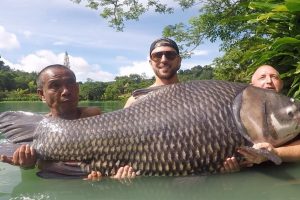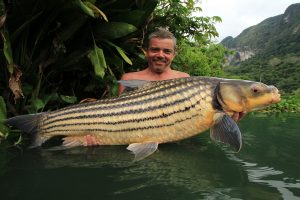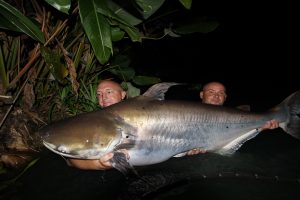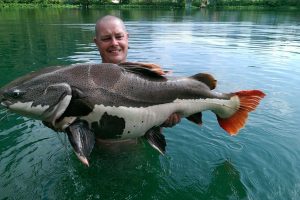
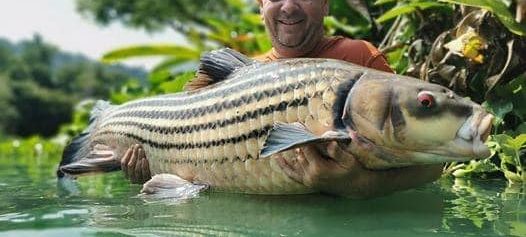
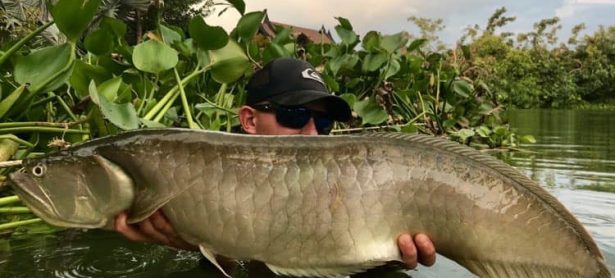
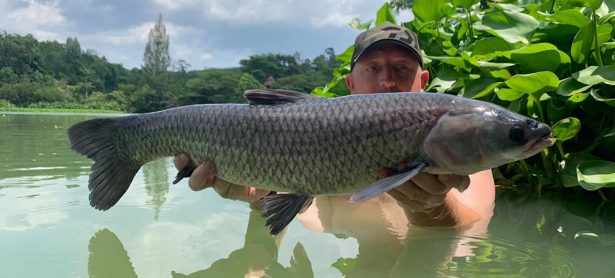
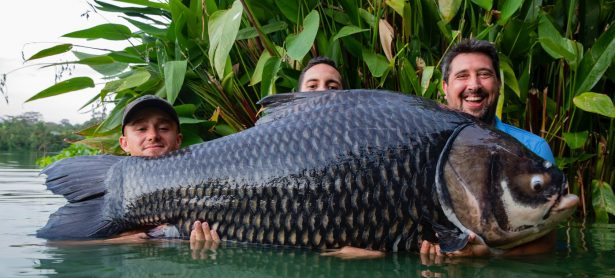
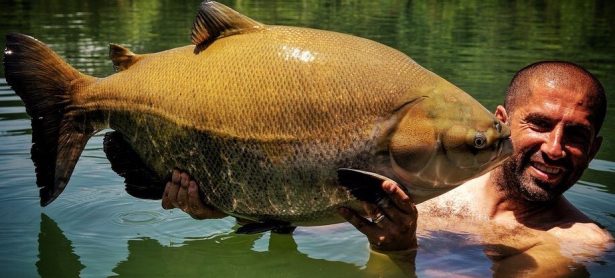
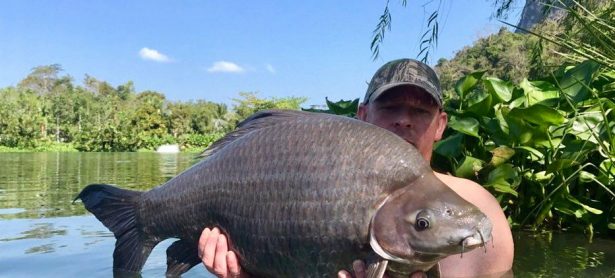
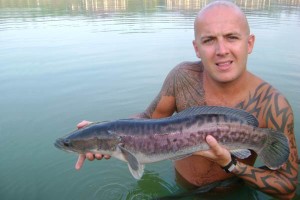
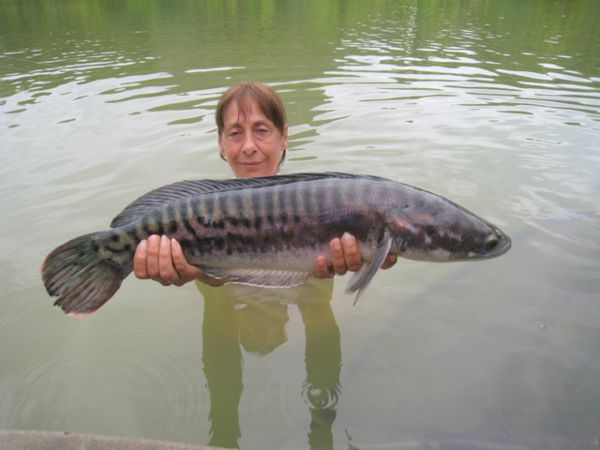
 Name: Giant snakehead (shadow tomen) .
Species: Channa micropeltes.
Thai name: Pla shado.
Max length: 1m.
Max weight: 30kg (65lb).
IGFA record: 10kg (22lbs).
Diet: Fish, mice and frogs.
To fish for our giant snakehead you are best to use live frogs close to the water hyacinth beds, or they will occasionally take deadbait. Slow retrieves seem to work best, as snakeheads rarely chase down their prey. The snakehead is deadly at ambush tactics; they pounce with great speed and accuracy. Fish fry and small frogs are taken in one quick gulp, but with bigger prey the snakehead use their sharp teeth and powerful jaws to immobilize their victims, often cutting their prey in half. Snakeheads are great fish to target on the fly using floating lines and surface lures, as the takes are exhilarating.
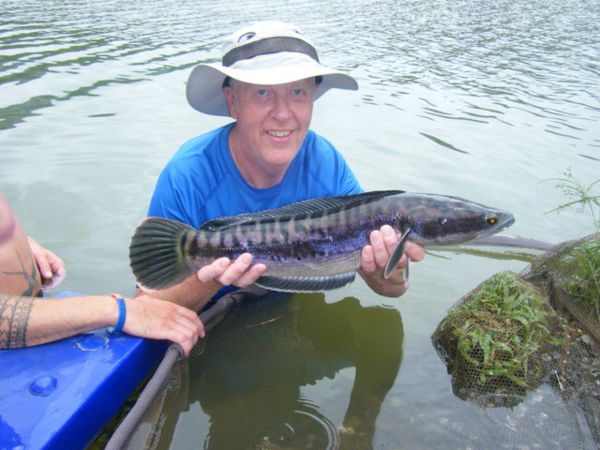
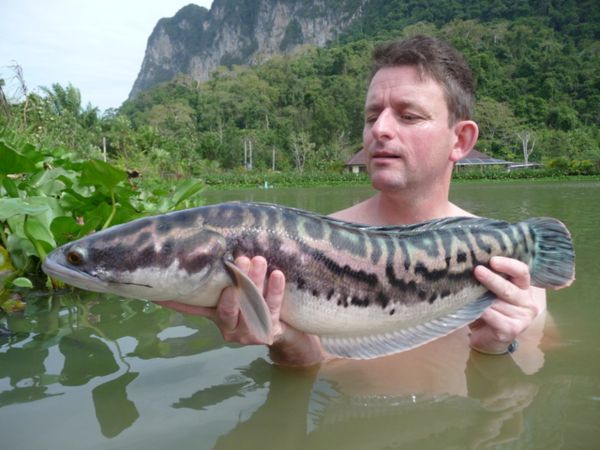
For targeting these fish we do allow 8wt tackle as the lures you use are small, and due to the fact you will be fishing the weeded margin you should not encounter the monster inhabitants of our lake. If you are planning to fly fish for these exciting fish, bring your own fly rods as we do not supply them. We suggest 8wt fly outfits with floating lines, and as with all hooks used at Gillhams they must be barbless. When bringing your own equipment you must show it to a senior guide prior to use, and their decision will be final as to whether it is safe to use on our fish. Please be aware Gillhams does not allow the use of extra light tackle, also we do not allow line class records to be pursued here, as our fish care is of utmost importance.
General facts on the giant snakehead:
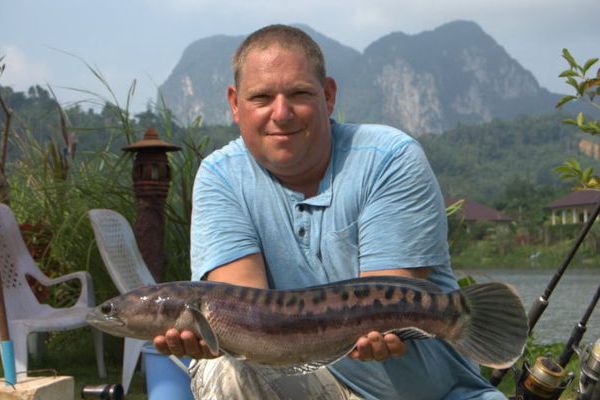
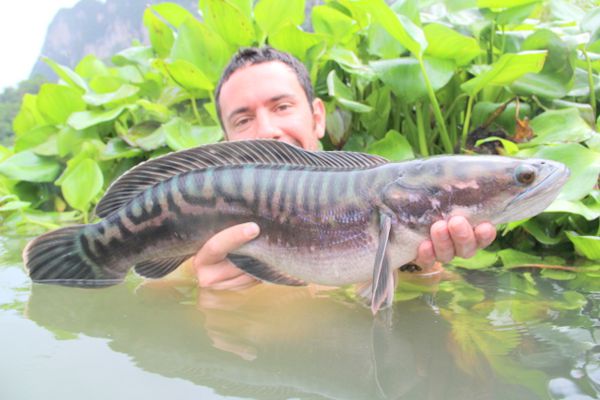
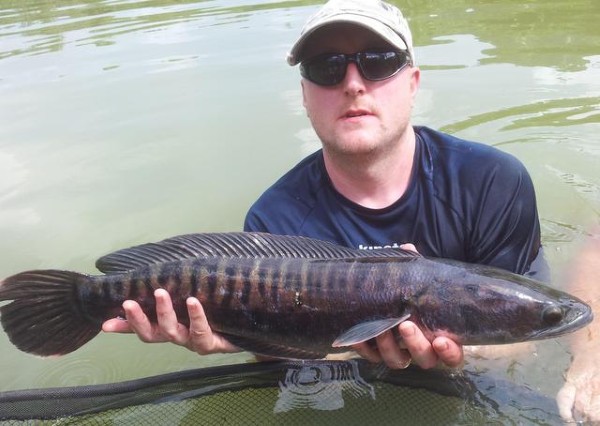
The giant snakehead is native to Thailand and throughout South East Asia, while the true big specimens are located in Malaysia. Colouring of giant snakehead depends on the colour of the water they inhabit; in dirty water they are a very pale colour but in clear water they are brightly coloured in purples and greens. Our snakehead have dull purple bands with flashes of light green to a cream belly. Snakeheads are extremely territorial; they are very aggressive and will attack and bite anything that invades their space. At spawning time, which is around May/June at the start of the rainy season, the snakehead build a nest to lay their eggs in. It is rumoured among Thai fishermen that the adults guard the nest and will attack anyone who comes too close.
They claim to have friends who have great lumps torn from their legs, but there is no scientific evidence to back these tales up. In the wild, snakehead prefer still water, and even swamps and stagnant water is tolerated as long s there is an abundant food supply. They are even found in rice fields, and when the water dries up they will bury in the mud and survive for many months. Big snakehead are solitary fish which hide amongst snags, trees and heavily weeded areas. They stay under cover for most of their lives, emerging only to feed, and they are rarely found in open water and seldom swim at midwater level, preferring to hug the bottom. Many rumours surround these popular Thai sporting fish. Thai fishermen claim the snakehead can travel over land to find new lakes and ponds.
Snakehead have been recorded at weights of 35kg in the past, but fish over 9kg are now rare due to destruction of their environment and overfishing. Unfortunately for the snakehead species they are fantastic eating; in fact they are the Thai’s favorite eating fish, deep fried with sweet chili or garlic and pepper, and nothing goes to waste as heads and body parts all go into a fish soup. When you are in Thailand look for this delicious fish on the menu, and although most are farmed, they are a great tasting fish. However, all fishing at Gillhams is catch and release so you will not be trying them here!